What this service covers
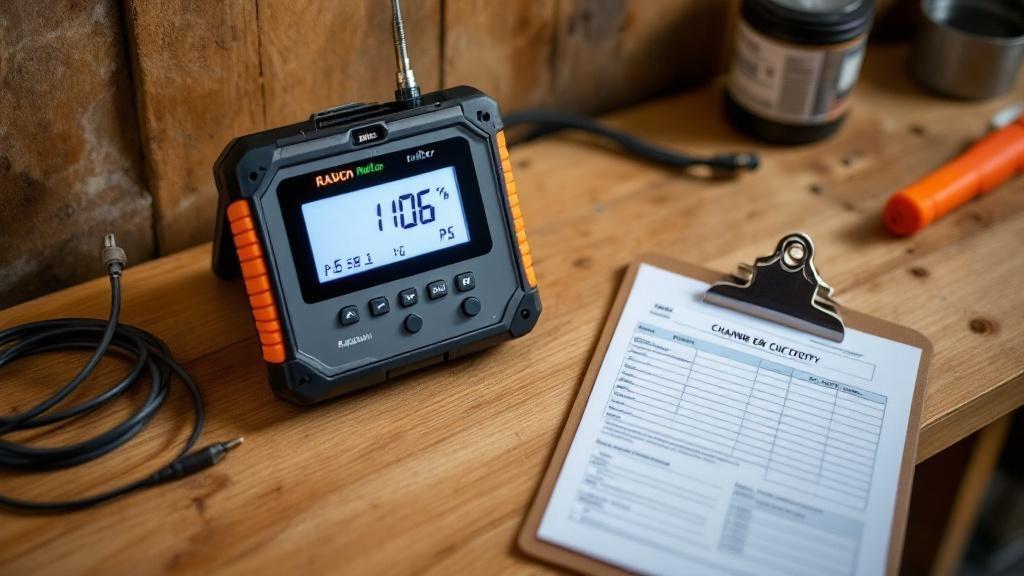
Measurement for home sales, post-install verification, and households that simply want the number. Kentucky requires anyone testing for hire to be certified under KRS 309.436, overseen by the Kentucky Board of Radon Safety, and tests follow the ANSI/AARST measurement standards: device placement on the lowest lived-in level, closed-house conditions, and a written report that states where the device sat and when.
Typical pricing
$150-$300
Pricing varies by job specifics. Free phone or on-site quotes; fixed pricing once the technician has assessed the job.
Picking between a two-day answer and a season-long one
Short-term devices, charcoal kits, electrets, and continuous monitors, measure days: enough to screen a house, and the only practical tool inside a purchase contract. Long-term devices, usually alpha-track detectors, measure months, and they answer the question the EPA's risk math actually asks, which is what you breathe across a year, not during one cold week.
In the Bluegrass the seasons pull hard on the number. A closed January house, furnace running and stack effect at full strength, draws more soil gas than a May house with windows open, so a single warm-season screening can flatter a house that runs high all winter. That is why a borderline short-term result between 2 and 4 pCi/L earns a follow-up: either a second short test in the heating season or an alpha-track detector left out across it.
For a sale there is no time for philosophy. A real-estate test runs a minimum of 48 hours under closed-house conditions, placed and reported by a certified measurement professional so the result stands when the other side's agent questions it. The comparison of kit testing and certified measurement lays out when each is the right tool, and the seasonal timing FAQ covers the calendar.
Placement and conditions that make a Kentucky result stand up
A radon number inherits the conditions it was measured under. The ANSI/AARST measurement standards put the device on the lowest level anyone regularly occupies, in a room people use rather than a closet or bathroom, raised off the floor, away from exterior walls, windows, drafts, and heat sources. For short tests, windows and outside doors stay closed for 12 hours before the start and throughout, with normal coming and going allowed and the HVAC running as usual.
Bluegrass housing adds judgment calls. A split-foyer in Lawrenceburg gets the device on the lower level, because that half-buried slab is where the number lives. A walkout basement in Nicholasville reads differently at the buried wall than at the glass one, so placement follows where people actually sit. A Paris house with a dirt-floor cellar nobody enters is measured on the first lived-in floor, with the cellar noted on the report.
On a transaction, the procedure thickens for good reason: tamper controls, a signed agreement not to open the house mid-test, and a report listing device serial numbers, start and stop times, and the certified professional's credentials. Those details are what let a lender, an agent, or a relocation company accept the number without argument. See testing before you buy for how that fits an inspection window.
Reading a Bluegrass result without panic or shrugging
The EPA's action level is 4.0 pCi/L: at or above it, fix the house; between 2 and 4, consider fixing it, because no concentration is risk-free. Those two sentences carry almost every decision, and the local context tells you how often each branch comes up. The state health cabinet's 2017 release reported more than 55 percent of tested Fayette County homes elevated, and the AARST analysis of CDC data found 44 percent of 28,793 Kentucky lab tests from 2008 to 2017 above the action level. Around here, a high first test is the common case, not the surprise.
A result is also not a verdict on the neighborhood, only on one house under one set of conditions. Karst ground makes next-door comparisons nearly useless: a solution channel can feed one footprint and miss another. Retesting has its own calendar: every two years as a habit, after any renovation that touches the foundation or the HVAC, after a mitigation system is installed, and whenever someone starts sleeping or working on a lower level.
Keep every report. A file of dated results, same room, same season, is the cheapest long-term monitoring there is, and it becomes real money at resale when a buyer asks what the house runs. Our results FAQ walks through the bands, and the diagnosis page turns a number into a next step.
Service area
Radon Testing is available across Lexington and the inner Bluegrass. Per-suburb pages: